Coaching and guidance
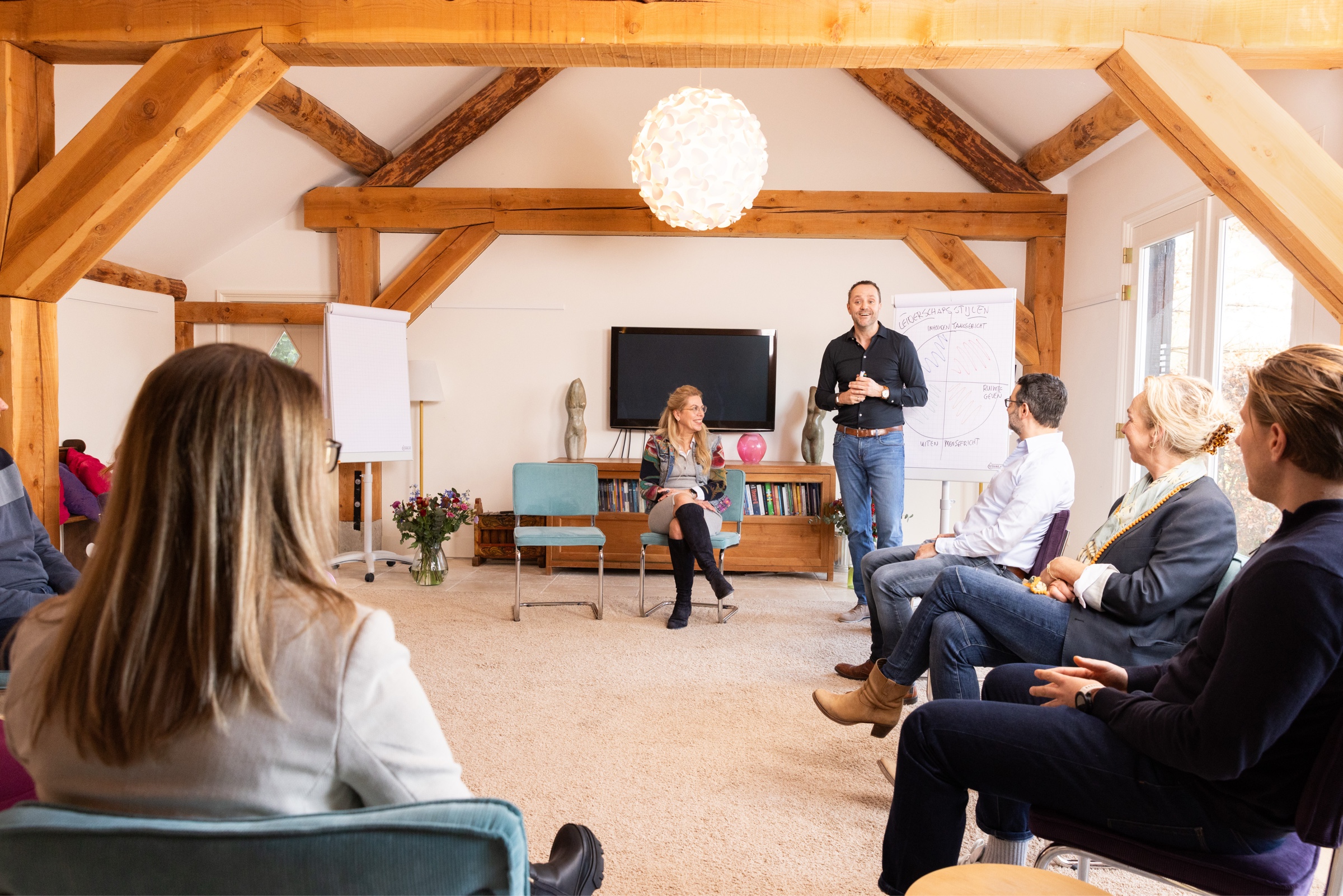
Organisations increasingly notice that their teams are under pressure. In practice, this often starts with team collaboration, which may be strained by hybrid work, generational differences, or simply high workloads. Research shows that communication issues and unclear roles are common causes. This leads not only to poorer performance but also to reduced job satisfaction. For many companies, therefore, this is a key topic. In this article, we explore coaching and training for teams, two ways to improve team performance.
“Hybrid work sometimes makes it harder for team members to really connect or switch gears quickly, while generational differences create other challenges,” says Matthijs van der Bijl of Engagement Builders. “And then there’s the high workload, which makes people focus on firefighting instead of looking ahead. Through coaching, often combined with training, we don’t just give teams the tools; we help them apply those tools in practice. This enables teams to better handle whatever comes their way.”
What is the difference between coaching and training?
Training is typically practical and focused on skill development. Think of sessions where teams learn to communicate more effectively, run better meetings, or manage their time and resources more efficiently. The outcome is tangible: participants gain tools and techniques they can apply immediately.
Coaching, on the other hand, is process oriented. It focuses on creating awareness, reflection and long-term behavioural change. In a team context, coaching addresses team dynamics, trust and shared responsibility. While training provides knowledge and tools, coaching ensures they are truly applied and embedded in daily practice.
In practice, we often see that when a team only follows a communication training, they quickly fall back into old habits, despite the best intentions. This is especially the case when only one team member attends the training. A team coach who guides the team as a whole helps transfer the knowledge and skills and supports them in actually applying these in their day-to-day work. As a result, improvements remain visible.
The reverse is also true: a team that only receives coaching may lack the concrete skills or knowledge of tools or methodologies needed to achieve real results. That’s why the combination of both often truly makes the difference.
Key differences between training and coaching:
- Focus: training focuses on knowledge and skills, coaching on behaviour and mutual trust.
- Duration: training is often short and intensive; coaching is spread out over a longer period.
- Outcome: training provides immediately applicable knowledge, coaching ensures it is used consistently.
- Approach: training is instructive, coaching is guiding and reflective.
Team formation and collaboration
Effective teams don’t happen by accident. It’s essential to focus on shared goals, clear roles, and open communication, while fostering a sense of (psychological) safety. Building trust, addressing conflict through dialogue rather than debate, and giving constructive feedback are all key to engaged employees and high-performing teams.
The well-known stages of team development, described by Bruce Tuckman (1965), illustrate this clearly: forming (introduction and orientation), storming (conflicts and disagreements), norming (clarifying roles and rules), and performing (working together effectively and achieving results). Many teams remain stuck in the storming or norming phase, training and coaching help them progress more quickly to performing.
Working effectively as a team also requires room for shared learning and reflection. Teams that regularly take time to reflect on their collaboration develop faster than those that don’t. Investing in team training helps employees align better, take ownership, and stay focused on collective goals, increasing team spirit and job satisfaction.
A good example of this is a long-term assignment at a major technology company.
The organisation approached us with a request to provide team guidance for the project group responsible for designing and implementing a new working method in the primary process. Throughout this guidance, it became clear that there was a strong need for knowledge and skills in leadership and personal leadership. Embedding these skills in daily practice required team coaching for the newly formed teams that emerged from the redesigned work agreements within the primary process.
Team coaching and training as a complementary duo
Training and coaching are most effective when they reinforce each other. Training provides teams with the skills they need to collaborate more effectively. Team coaching ensures that these skills become embedded in the team culture and that the team continues to develop over time. For Engagement Builders, this means that every assignment is unique in design and approach. No programme is ever standard. In some cases, the emphasis lies on developing new skills, while in others the focus is on reflection and behavioural change.
That is why Engagement Builders always designs programmes in close collaboration with our clients. Our many years of experience enable us to respond quickly and make adjustments where needed, ensuring that the desired skills are developed or the desired behaviour is encouraged. We have countless examples of how we support organisations like yours. Would you like to learn more about the impact of our coaching and training, or do you have a specific challenge in mind? Feel free to contact us.